Nutritional requirements change in perimenopause in specific, documented ways. The formula that works after 40 is not a clean eating plan. It is a targeted approach addressing the hormonal, metabolic, and structural changes that make standard dietary advice insufficient.
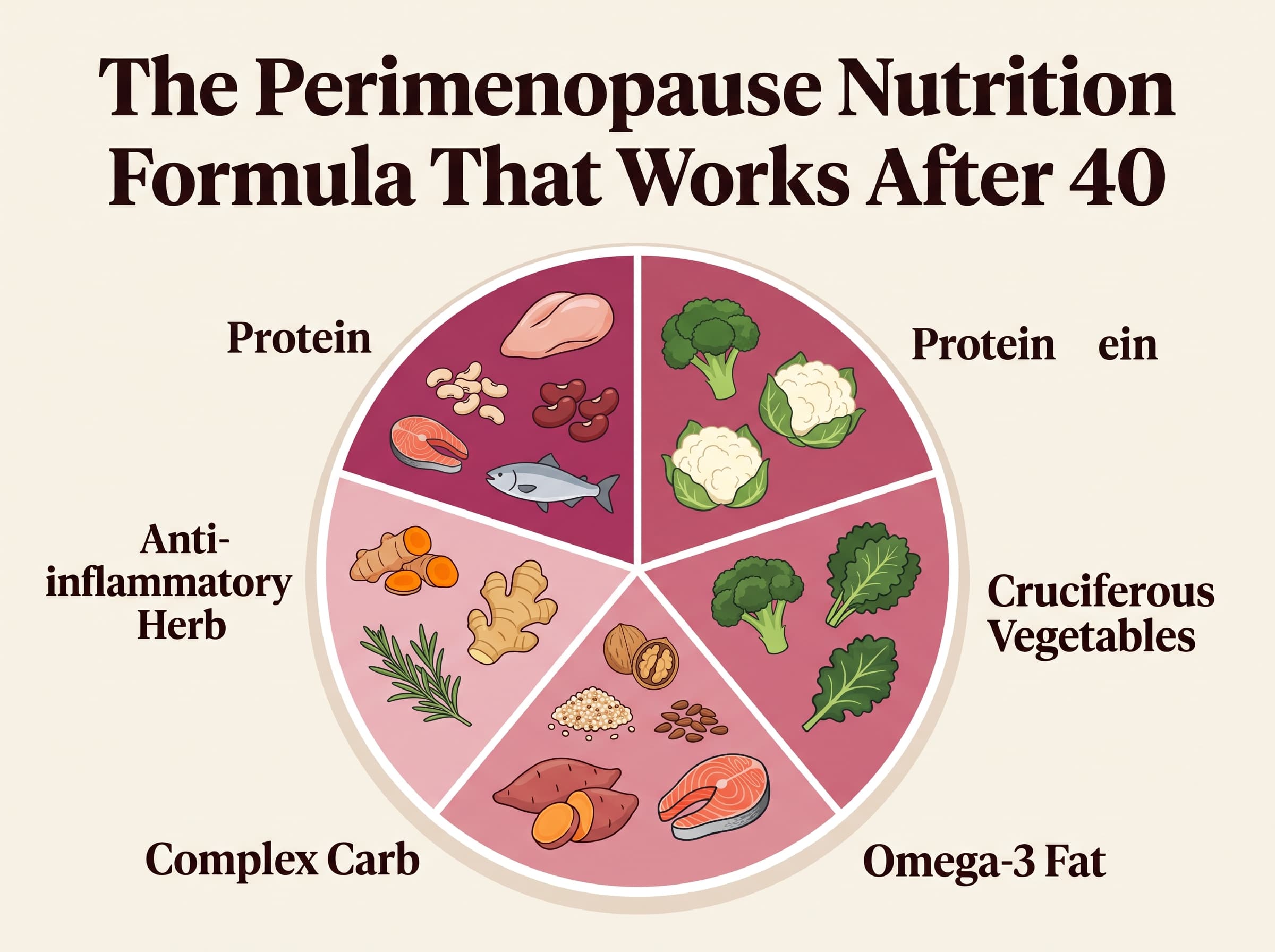
The Nutrition Formula That Actually Works for Women After 40 in Perimenopause
Standard dietary advice — eat less, move more, focus on whole foods — is
not wrong for women in perimenopause. But it is incomplete.
The hormonal changes of perimenopause create specific nutritional requirements
and specific metabolic vulnerabilities that generic healthy eating guidance
does not address. A woman in her 40s who eats a genuinely healthy diet and
still experiences worsening energy, body composition changes, brain fog, and
mood instability is not failing at nutrition. She is eating for a different
physiological environment than the one she is now operating in.
The formula below addresses what actually changes nutritionally in perimenopause
and what specific dietary interventions the evidence supports for each change.
The Five Nutritional Priorities in Perimenopause
Priority 1: Protein at a Higher Target Than You Think You Need
The most consistently underaddressed nutritional change in perimenopause
is protein adequacy.
As estrogen declines, muscle protein synthesis becomes less efficient.
The leucine threshold required to activate the cellular signaling cascade
that builds and repairs muscle increases, meaning more protein per meal is
needed to achieve the same anabolic stimulus as at 35.
The evidence-based target for perimenopausal women is 1 gram of protein
per pound of body weight per day — significantly higher than most general
dietary recommendations and significantly higher than most women in their
40s are currently consuming.
This protein should be distributed across meals at 30 to 40 grams per
sitting rather than concentrated at dinner. A single large protein meal
produces less muscle protein synthesis than the same total protein spread
evenly across three meals, because leucine-activated signaling has a ceiling
effect per episode.
The highest biological value protein sources for perimenopausal women:
- Wild-caught fatty fish — salmon, sardines, mackerel — providing both
complete protein and omega-3 fatty acids - Pastured eggs — one of the most complete single protein sources available,
providing choline for liver and cognitive function - Grass-fed beef — complete amino acid profile with high bioavailable iron
for thyroid and energy support - Plain Greek yogurt or kefir — protein combined with beneficial bacteria
supporting the estrobolome and gut-hormone connection
Priority 2: Cruciferous Vegetables at Every Meal
Cruciferous vegetables — broccoli, cauliflower, Brussels sprouts, kale,
cabbage, rocket, bok choy — are the most hormonally targeted food category
available in perimenopause.
They contain glucosinolates that are converted to DIM (diindolylmethane)
and indole-3-carbinol in the gut, compounds that support liver estrogen
metabolism through all three phases of liver detoxification. This supports
proper estrogen clearance, reducing recirculation of estrogen metabolites
that would otherwise worsen estrogen dominance symptoms.
They also provide sulforaphane, which activates Nrf2 pathways — the
cellular antioxidant and detoxification response system — supporting the
liver's capacity to process the accumulated metabolic and hormonal load of
the perimenopausal transition.
The target is at least two servings across two or more meals daily. Lightly
cooked rather than raw maximizes DIM availability, and pairing with a small
fat source improves absorption of fat-soluble compounds.
Priority 3: Omega-3 Fatty Acids at Therapeutic Quantities
Omega-3 fatty acids — specifically EPA and DHA from marine sources — are
among the most evidence-supported nutritional interventions for three of the
most disruptive perimenopausal symptom categories.
For mood and anxiety: EPA specifically has antidepressant effects
comparable to low-dose antidepressants in some clinical trials, operating
through serotonin receptor density and inflammatory cytokine reduction.
For brain fog: DHA is the structural component of neuronal membranes and
myelin sheaths. Adequate DHA supports the cognitive functions that estrogen
fluctuation is disrupting.
For joint pain and inflammation: EPA and DHA reduce the prostaglandins
and inflammatory cytokines driving joint inflammation through direct
biochemical inhibition of the inflammatory pathway.
The therapeutic dose for symptom management is 2 to 3 grams of combined
EPA and DHA daily — significantly more than a standard fish oil capsule
provides and equivalent to three or more servings of fatty fish per week.
A high-quality concentrated fish oil supplement providing at least 1g EPA
and 700mg DHA per serving is needed to reach therapeutic levels without
eating fish daily.
Priority 4: Magnesium-Rich Foods as a Non-Negotiable Daily Commitment
Over 70 percent of women are deficient in magnesium, and the consequences
in perimenopause are magnified because magnesium is required for:
- Cortisol regulation — magnesium buffers the HPA axis stress response
- Progesterone synthesis — magnesium is a cofactor for progesterone production
- Insulin sensitivity — magnesium activates insulin receptor signaling
- Sleep quality — magnesium activates GABA-A receptors promoting sleep depth
- Bone density — magnesium is required for calcium metabolism and bone
mineral formation
The dietary sources with the highest magnesium content per serving:
- Dark chocolate above 85% — 65mg per 30g serving
- Pumpkin seeds — 150mg per 30g serving
- Almonds — 80mg per 30g serving
- Leafy greens — spinach, Swiss chard — 80 to 150mg per cooked cup
- Avocado — 58mg per whole fruit
Dietary magnesium alone is rarely sufficient to correct deficiency in
perimenopausal women, making magnesium glycinate supplementation at 300 to
400mg daily a clinically appropriate addition.
Priority 5: Blood Sugar Management as the Foundation of Everything Else
Declining insulin sensitivity in perimenopause makes blood glucose
management the metabolic foundation that determines how well everything
else works. Poor blood sugar control amplifies every other perimenopausal
symptom — it drives cortisol, worsens sleep, destabilizes mood, promotes
fat storage, and produces the energy crashes that make the transition
feel exhausting.
The dietary principle that produces the most consistent blood glucose benefit
with the least dietary complexity: always eat protein and fat before or
alongside carbohydrates, never carbohydrates alone.
Eating protein and fat before carbohydrates at any meal reduces postprandial
glucose spike by 36 to 44 percent compared to eating carbohydrates first.
This single behavioral change, applied consistently, produces insulin-sensitizing
effects that reduce cortisol, improve body composition, stabilize mood, and
support sleep without requiring caloric restriction or carbohydrate elimination.
Perimenopausal women who eat 1g of protein per pound of body weight daily
and distribute it evenly across three meals maintain significantly better
muscle mass, insulin sensitivity, and body composition through perimenopause
than women eating the same total calories with lower or unevenly distributed
protein — independent of exercise.
The Foods That Work Against Perimenopause Symptoms
Several foods have specific mechanisms by which they worsen the hormonal and
metabolic environment of perimenopause:
Refined seed oils — canola, soybean, corn, sunflower — drive the omega-6
dominant inflammation that worsens joint pain, mood instability, and the
inflammatory component of brain fog. Replacing with extra virgin olive oil
and avocado oil is one of the highest-return single dietary changes available.
Alcohol — suppresses progesterone synthesis directly, worsens liver
estrogen clearance, fragments sleep architecture, elevates cortisol, and
drives the visceral fat accumulation that perimenopause is already promoting.
Even moderate regular alcohol consumption compounds perimenopausal symptoms
through multiple simultaneous mechanisms.
High-glycemic refined carbohydrates — drive blood glucose variability,
insulin response, cortisol compensatory reaction, and fat storage signaling
in an insulin-resistant environment. This is not about eliminating carbohydrates
but about sequencing them appropriately and favouring low-glycaemic sources.
For the complete perimenopause nutrition guide including meal timing protocols,
supplement stacking recommendations, and the hormonal testing that reveals
individual deficiencies, visit
perimenopauseedit.estorealm.com.
Frequently Asked Questions
Do perimenopausal women need to count calories?
Caloric counting is rarely the most productive nutritional focus for
perimenopausal women. The hormonal environment determining body composition
is not primarily responsive to caloric restriction. Prioritizing protein
adequacy, blood sugar management, anti-inflammatory food choices, and
micronutrient sufficiency — particularly magnesium, omega-3, and vitamin D —
produces better body composition and symptom outcomes than caloric restriction
in this population.
Is dairy a problem in perimenopause?
Dairy is not universally problematic, but conventional dairy from non-organic
sources contains precursors to IGF-1 and androgens that can amplify acne and
androgen-driven symptoms in susceptible women. Fermented dairy — plain Greek
yogurt, kefir — provides beneficial bacteria, complete protein, and calcium
with lower hormonal precursor content than non-fermented forms. Women with
acne or significant androgen symptoms may benefit from a 30-day dairy
elimination to assess individual sensitivity.
How important is gut health for perimenopausal nutrition?
Extremely important. The estrobolome — the collection of gut bacteria governing
estrogen metabolism — directly determines whether estrogen is properly cleared
or recirculates after liver processing. A dysbiotic gut produces excess
beta-glucuronidase enzyme, causing estrogen to recirculate rather than excrete,
directly worsening estrogen dominance symptoms. Dietary diversity targeting
30 different plant foods per week and daily fermented food consumption
support the estrobolome and are therefore directly hormonal interventions.
What is the best way to add more protein without increasing caloric intake?
Protein is the most satiating macronutrient, so increasing protein typically
reduces total caloric intake by displacing less satiating foods rather than
adding to them. Practical approaches include replacing a carbohydrate component
of a meal with an additional protein source, adding eggs or Greek yogurt to
breakfast, and ensuring every meal has an identified protein anchor rather
than treating protein as a side consideration.
Should I take a multivitamin in perimenopause?
A multivitamin is not a substitute for the targeted nutritional approach
described above, but it can fill gaps. The nutrients most commonly deficient
in perimenopausal women — vitamin D, magnesium, omega-3 fatty acids, and
in some women B vitamins and iron — are not present in clinically relevant
quantities in most standard multivitamins. Targeted supplementation based
on assessed deficiency is more effective than a general multivitamin.
This article is for educational purposes only and does not constitute medical
or nutritional advice. Please consult a qualified healthcare provider or
registered dietitian for personalized nutritional guidance.
More from The Perimenopause Edit
What Perimenopause Does to Your Bones (And the Window You Cannot Afford to Miss)
Bone density loss accelerates dramatically in the years around perimenopause. The interventions that protect it must begin before significant loss has occurred. Here is the evidence on the window, the risks, and what actually works.
The Neurochemical Reason Your Mood and Anxiety Changed in Perimenopause
New-onset anxiety in your 40s with no clear life trigger is not a psychological problem. It is a neurochemical one. Here is the mechanism and what addresses it at the level it is actually occurring.
Why Your Weight Changed After 40 Even Though Nothing Else Did
Eating the same. Moving the same. Weight redistributing anyway. The explanation is hormonal and the interventions that work address the hormonal environment, not just the calories.
The next the perimenopause edit essay in your inbox.
One careful letter, every Sunday. Free.